My Rambling Thoughts
  • Home
  • Blog

Menopause: The HRT dilemma

12/19/2019

2 Comments

 
As a follow-up to my previous post on perimenopause (and my hormonal chronology), I venture now into the next phase, menopause, a term thought to come from the Greek words for month (mēn) and pause (pausis). A woman is considered officially in menopause once she has reached 12 months without periods, this occurs at around 50-52 years of age in average in women in the US. Menopause can occur earlier though (and also sometimes abruptly, without the perimenopause leading into it) in a woman’s 30s or even 20s and teen years, as a result of ovarian insufficiency that causes premature menopause, cancer treatment such as radiation and chemotherapy, or hysterechtomy of both uterus and ovaries (not uterus alone), causing periods to stop immediately, usually with hot flashes and other symptoms.

Once (and after) menopause, women are at increased risk of certain health conditions including weight gain, heart disease, and osteoporosis due to bone loss or weakening. Incontinence may occur with involuntary urine loss and a higher risk of vaginal and urinary infection; vaginal dryness may bring pain, bleeding and reduced libido.
Picture
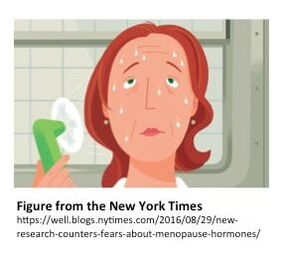
Most of the menopause symptoms and uncomfortable consequences are due to the decrease in hormones produced by the ovaries (estrogen and progesterone), mainly estrogen reduction; other tissues such as the adrenal glands and adipose tissue (fat) make these hormones in minimum quantities. This is why estrogen is an effective treatment for relief of symptoms during the menopausal transition and postmenopausal years including hot flashes (and resulting fatigue and depression associated with lack of sleep) and vaginal dryness and sexual function. Estrogen can be taken as Hormone Replacement Therapy (HRT) with progesterone/progestin (when the uterus is present progesterone is given with estrogen given to prevent endometrial cancer) or without it (when the uterus is absent because of hysterechtomy). HRT however has been and still remains controversial. It was very popular starting in the late 1960s not just for symptoms but also to prevent heart disease and osteoporosis in post-menopause. Estrogen protects from osteoporosis by preventing bone mass loss, and it was FDA approved for osteoporosis prevention in post-menopausal women. Studies published later on scared everybody against HRT, and its use declined afterwards in the new millennium.

A study led by the Women’s Health Initiative (WHI) since the early 1990s that included 27,347 women in the US ages 50-79 on HRT and subsequent no treatment with follow-up of 13 years, was published in 2002 showing increased risk for breast and uterine cancer, as well as heart attack, blood clots and stroke. This study however drew its conclusions from mainly older women (average age 64) who received HRT long after menopause, whereas the recommendation is to start earlier, right after menopause. Subsequent studies and analyses found that when HRT started earlier it did not cause an increased cancer or stroke risk, and it may even protect from heart disease. In 2012-2013 several medical and OB/GYN organizations in the US stated that HRT is an option for menopausal symptoms treatment.

Picture
The “HRT or no HRT” decision is an individual one, to be made with your doctor and considering all risk factors that may apply to you including your family history, health and lifestyle, menopause age and severity of menopause symptoms. If HRT is chosen it usually starts at the lowest dose possible, and the patient decides on type from available options (oral/pills, patch or creams).

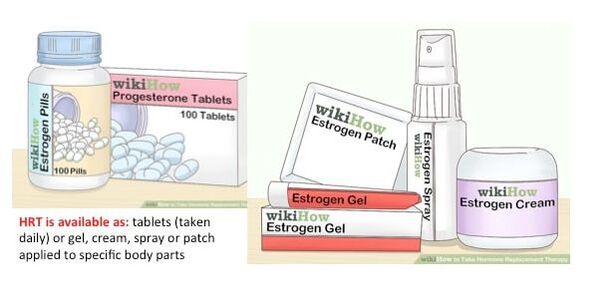
Nowadays there is a variety of different HRT formulations to choose from that come in different forms and dosages, including creams, gels or sprays to be topically applied on the arm or leg or as vaginal suppositories, rings or creams for women that experience uncomfortable vaginal dryness and intercourse; combination of estrogen and progestin as skin patches hidden from sunlight usually used below the waistline on the lower stomach; or tablets (pills) taken daily. When both progestin and estrogen are used (for women with a uterus), called “combined HRT” the regimen can be monthly or every 3 months in a cyclical manner (estrogen daily, progestin only for 14 days) for women still having periods, which will then come monthly or every 3 months respectively, or continuously (both hormones taken daily) for women who are post-menopausal and no longer have periods.

Picture

Picture
Helpful guidelines and tools towards decision making regarding HRT use are offered by 3 organizations: the American College of Obstetricians and Gynecologists, the North American Menopause Society (NAMS), and the Endocrine Society. NAMS offers a free mobile app called MenoPro with two modes (for clinicians and for women) that can help the female patient and her doctor assess together HRT and non-HRT options taking into account medical history and risk, and links to online tools.

The Endocrine Society, through its hormone health network, has made a very comprehensive Menopause Map - My Personal Path available in English or Spanish, where you can find information (that you can read or listen to) about perimenopause, menopause and early menopause, why hormone depletion matters and options to treat symptoms including lifestyle changes (diet, sleep, exercise, vitamins) and HRT, as well as numerous additional resources such as calculators of risks or vitamin D intake, and several additional informational booklets and videos on a variety of menopause-related topics.
2 Comments

Zoonotic diseases (transmitted to humans from other animals) are more common than you might think

12/10/2019

1 Comment

 
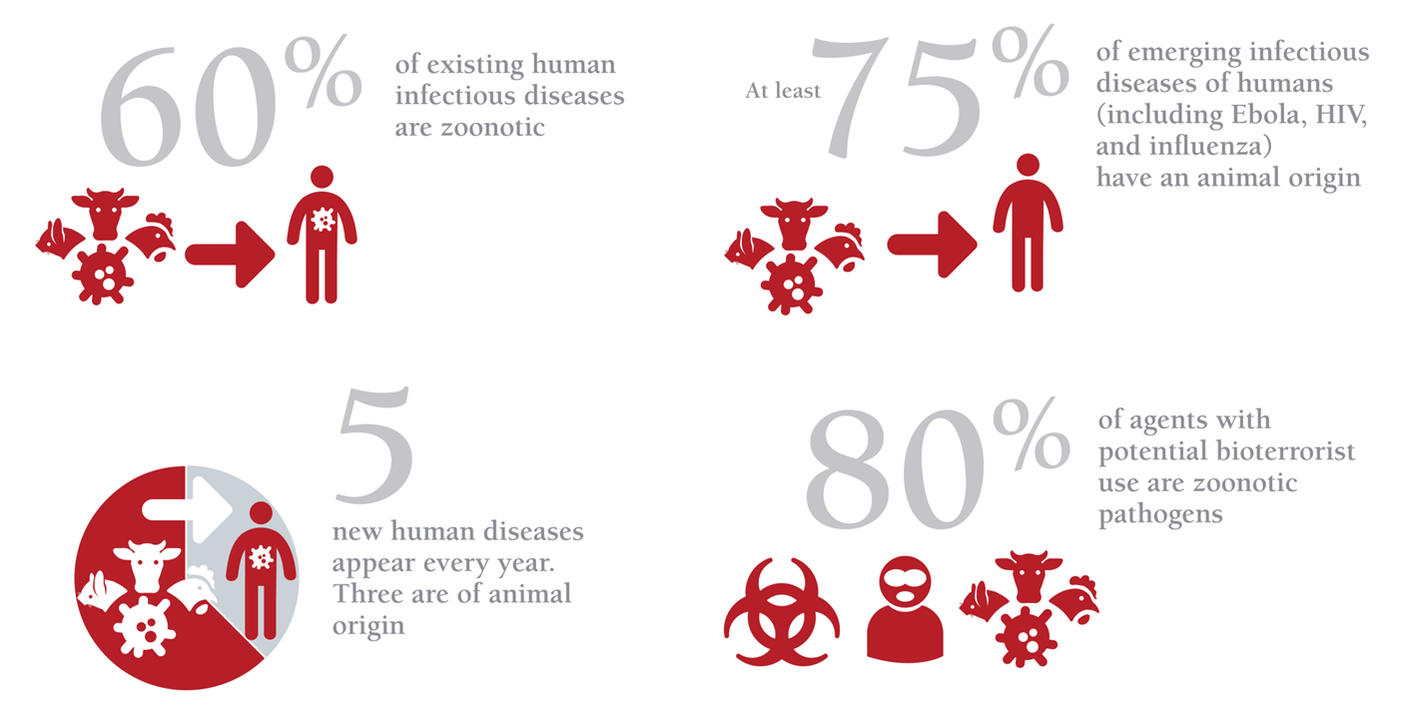
More than half of infectious diseases that have been around for a while, and three quarters of emerging (new) infectious diseases in people are transmitted from other animals to humans. These infections are called zoonoses and cause zoonotic diseases. Zoonoses are defined by the World Health Organization (WHO) as diseases and infections naturally transmitted between people and vertebrate animals.
Picture
From: OIE (World Organization for Animal Health)
Picture
Transmission of these diseases (which are caused by viruses, bacteria, parasites or fungi) can occur in different ways, including direct contact with body fluids from infected animals (by touching pets, or via bites or scratches from them), indirect contact with habitats of or surfaces touched by infected animals (their food containers, aquarium water, plants and soil), vector bites (tick or mosquitoes), or by eating contaminated/undercooked food (milk, meat, eggs, raw fruits and vegetables). An example of direct transmission from animals by bite is rabies transmitted often by dogs. Some zoonoses need an intermediate vector to be transmitted from vertebrate animals to humans, including the bubonic plague (from rats or prairie dogs via fleas to humans, and then between people via respiratory secretions), Lyme disease (from deer mice via ticks) and West Nile virus (from birds, by mosquitoes).

A recent emerging zoonotic disease with a huge impact was SARS (severe acute respiratory syndrome) in 2003, transmitted by a virus and thought to originally come from Chinese horseshoe bats. The virus was then probably transmitted to civets, small cat-like mammals eaten in some parts of China, then “jumping” to humans through exposure by butchering or food preparation. Eventually the SARS virus became capable of being directly transmitted by respiratory secretions between humans. The Middle East respiratory syndrome or MERS virus, although related to the SARS family (coronaviruses), is very different in genetic composition. The MERS virus hosts are camels, however evolutionary ancestors may also have been bats.

The Congo’s Ebola epidemic in West Africa in 2014-2016 was caused by a virus believed to be transmitted by fruit bats that are widespread in many parts of Africa. There is also Ebola virus transmission from monkeys, pigs, forest antelope or porcupines. These wild animals’ meat, some of which is known as bush meat in parts of Africa, is very popular, and its handling by hunters and butchers as well as eating it undercooked pose a great risk for Ebola virus transmission. The virus can also kill gorillas and chimpanzees; gorilla populations suffered an impressive decline of an estimated 5000 gorillas in Gabon and the Republic of the Congo in 2002-2003 during Ebola outbreaks.

Picture
Human tuberculosis (see my tuberculosis post) is caused by the bacterium Mycobacterium tuberculosis, but bovine tuberculosis caused by Mycobacterium bovis and affecting cattle, can be transmitted to humans in what is known as zoonotic tuberculosis that is sometimes fatal and affects people mostly in Africa and southeast Asia.

Some diseases that are now exclusively transmitted between humans, such as measles, influenza, SARS and HIV, are thought to have jumped at some point from animals to us, and animal domestication may have facilitated some of these events (see my previous post on domestication). Measles may have jumped from dogs to humans, although the measles-causing virus can no longer affect dogs, and smallpox may have originated from a cowpox virus that jumped from cows. The human immunodeficiency virus (HIV) is believed to have originated from chimpanzees and gorillas in Africa, afterwards adapting to the human host transmission. Viruses can change genetically (via mutations) very rapidly, and this favors efficient adaptation to new hosts, to the point where they do not need the previous host for transmission.

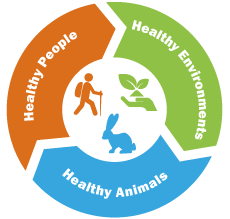
The One Health concept recognizes that humans and animals and their environment/ecosystem are all interconnected. As part of the “One Health” approach, building a strong and effective multi-sectoral collaboration between the animal and human health sectors locally and globally by integrating animal and human disease surveillance and response systems will allow early detection of possible outbreaks and prevent deadly epidemics. Besides zoonoses, the One Health approach also focuses on food safety and antimicrobial resistance (see my post on the latter).

1 Comment

Understanding domestication

12/3/2019

0 Comments

 
Picture
Domestic species, whether plants or animals, have been selected for (or adapted) by us humans, and are not the same as those found in the wild. Many domesticated species of plants and animals are not able to survive without our care.

Plants were first domesticated about 10,000 years ago, when agriculture begun with wheat, barley, lentils, and peas in what was then Mesopotamia, (now the Middle East -Iran, Iraq, Turkey, Kuwait and Syria), with very fertile valley soil between the Tigris and Euphrates rivers. Potatoes in South America and rice in Asia were among the first plants domesticated in those regions for food production. It is not clear when/where exactly olives were domesticated, the earliest was probably about 6000 years ago in the Middle East, spreading West to the Mediterranean and North Africa maybe 4500 years ago. Some plants were not cultivated for food purposes, for example cotton plants were used for their fiber to make cloth, and flowers for decoration.

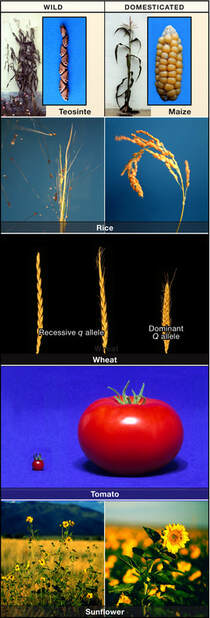
Nowadays in urban settings we are often not familiar with how wild species look like, as we are only exposed to plantations and/or products of domesticates crops. This figure from a review on crop domestication (Cell 2006; 127(7):1309-21) shows striking differences between wild and domesticated species of corn, rice, wheat, tomato and sunflower.

Animal domestication began in Mesopotamia to get meat, milk, and animal skins for clothing and tents. Among the first domesticated animals about 10,000 years ago are the goat and sheep, and chickens in Southeast Asia. It is now believed that animal domestication in most cases was not a single event but, as for pigs, goats, sheep, horses, and chicken, it happened multiple times with domestication events from local populations of wild ancestral species. For example, genetic analyses have shown that ancestors of domestic pigs were found across different regions in Europe, Asia and North Africa and domestication occurred a minimum of six times from local populations- one may have occurred over 13,000 years ago. Larger animals including horses and oxen were domesticated later for plowing and transportation. Cows were easily domesticated because as herbivores that eat vegetation usually available, whereas other herbivores that eat grains such as chicken require domesticated crops such as seeds and grain.
PictureFrom: https://www.theatlantic.com/science/archive/2016/06/the-origin-of-dogs/484976/
The very first species to be domesticated however, which happened before agriculture at a debated time that could have been between 15 and 40 thousand years ago, was the dog, first for hunting help and then as pets. In the first phase of domestication, the dog derived from the grey wolf (Canis lupus), however today domestic dogs are a distinct species (Canis lupus familiaris) and the most variable mammalian species on Earth.

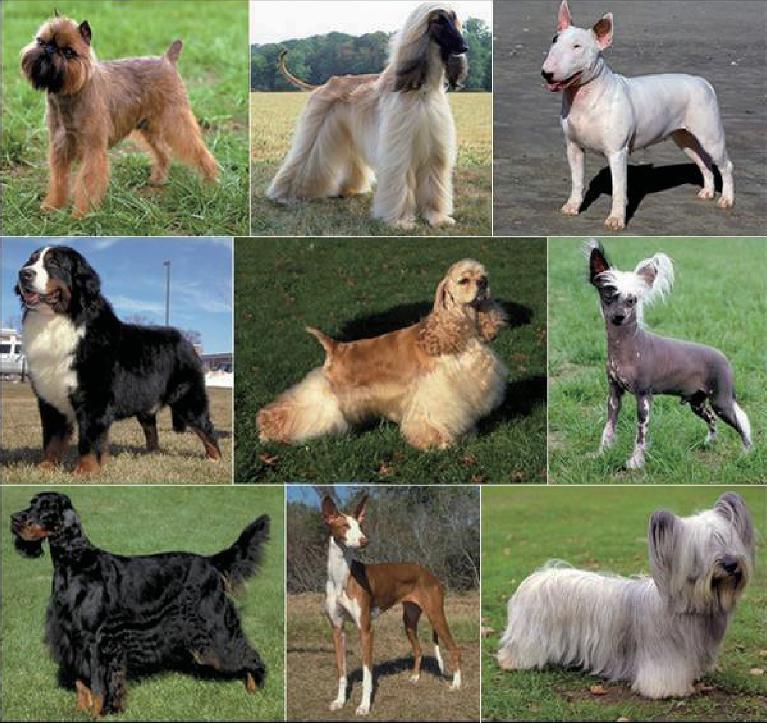
Most dog breeds were established in the last 300-200 years, with strong artificial selection resulting in almost 500 breeds with specific morphology (body size and skull shape, tail shape, fur and pigmentation). Dog breed selection has also worked for specific behaviors such as herding, hunting, guarding, and personality including aggression.

Picture
Morphological variation among dog breeds; from upper left and going clockwise: Brussels Griffon, Afghan Hound, Bull Terrier, Chinese Crested Dog, Skye Terrier, Basenji, Gordon Setter and Bernese Mountain dog, and in the center is a Cocker Spaniel. From: Natl Sci Rev. 2019; 6(4): 810–824.
Domesticated plants and animals can look very different from their wild ancestors. For example, domesticated tomatoes seem gigantic compared with their wild ancestors. Something similar occurs in chickens, first domesticated in Asia, with smaller early wild chickens (about two pounds) leading to domestic chickens today weighing as much as 17 pounds and laying many more eggs annually.

Domestication results in genetic changes. We may not be engineering the genetic alteration in the lab (or targeting specific gene/s or using elements from other organisms), but when selecting for taste, shape, color or growth features (faster, pest-resistant, sweeter, etc) we are indeed selecting for specific gene variants and mutations. As in other biology- and medicine-related fields, recent advances in genomics and gene technologies have shed light into aspects of domestication by revealing genome (DNA) sequences of both domesticated species as well as wild ancestors (alive or extinct).

Domestication in plants has led to acquired features such as modified seed size and shattering in cereal species, and modified size and shape in vegetable crops. These modifications have been associated with specific genes in species including tomato, rice, maize, soybean, barley and wheat.

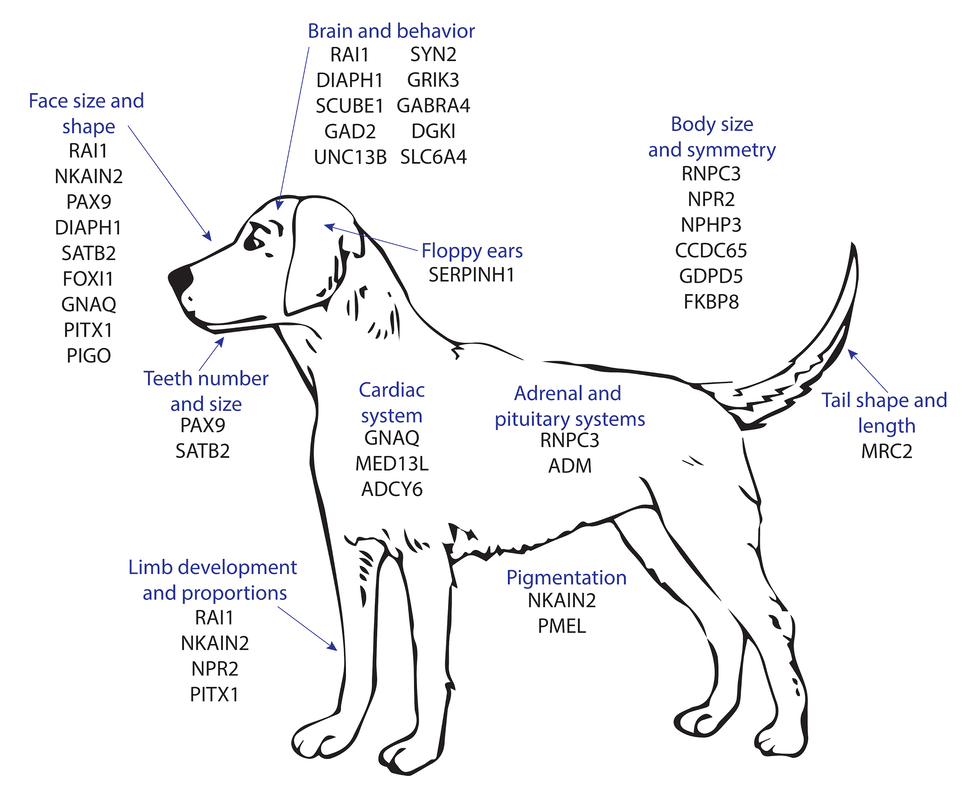
The first genome of a domesticated animal to be fully mapped was that of the chicken, in 2004 (the human genome sequence was completed and available in 2003). Gene sequence comparisons between domesticated and wild animals allow researchers to identify mutations or gene variants that are specific to domesticated animals, sometimes called “domestication genes”. One such gene in chickens is TSHR (thyroid-stimulating hormone receptor), which in wild animals coordinates reproduction with day length, resulting in breeding and egg laying restricted to spring and summer seasons. A TSHR mutation leading to one amino acid change in the receptor protein encoded by the gene in domestic chickens renders the hormone receptor inactive and enables chickens to breed and lay eggs all year long. In pigs, several gene variants/mutations have been reported, based on detailed analysis of genetic variation of local breeds (mostly European), to affect specific phenotypic traits: coat color (KIT, MC1R), production and fatness (LEPR, FTO, MC4R, LEP or MSTN), meat quality (PCK1, PRKAG3, ACACA, CAST, MTTP) and disease resistance (MUC4, GBP5). The figure below shows genes that have been shown to be directly or indirectly linked to phenotypes that distinguish dogs from wolves.
Picture
From: https://blogs.biomedcentral.com/on-biology/2018/06/28/village-dog-dna-reveals-genetic-changes-caused-by-domestication/
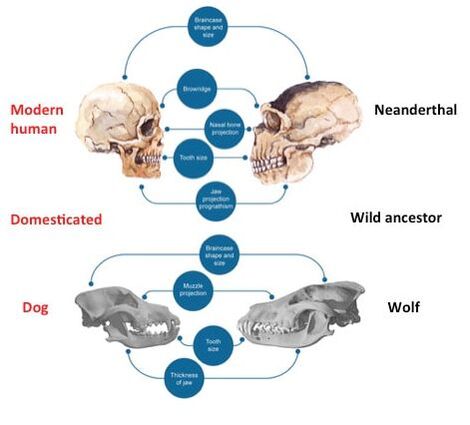
An interesting theory proposes that we humans (and also bonobos) have 'self-domesticated', based on reported domestication traits and genes that are present in domesticated species and not their wild counterparts. A study published in 2017 in PLoS ONE showed that these domestication traits are shared by our species but not found in our Neanderthal or Denisovan wild extinct ancestors. The figure below, from this study, shows a comparison of craniofacial features of us (modern humans) and Neanderthals (top) and dog and wolf (bottom). The left skulls of domesticated species show smaller brow ridges, nasal projections, teeth and cranial capacity; which has been referred to as ‘feminized’ and the product of reduction of androgen levels in parallel with a rise in estrogen levels in domesticated species.
Picture
0 Comments
    Picture

    Author

    Hi! This is an attempt to write simply about things I feel passionate about. My name is Judith Recht and I am a scientist by training, a later-in-life mother, and an expat in Bangkok, Thailand and Recife, Brazil (~4 years in each country) now back in the US. I was born in one country (USA) grew up in another (Venezuela) raised by Argentine parents and moved around four more times (NYC to Bangkok to Recife to Maryland). This blog is for those of you who might be interested in the diverse topics so far included and others coming up soon.

    Archives

    July 2021
    April 2021
    January 2021
    October 2020
    March 2020
    December 2019
    November 2019
    September 2019
    June 2019
    March 2019
    January 2019
    November 2017
    October 2017
    September 2017
    June 2017
    April 2017
    February 2017
    November 2016
    October 2016
    June 2016
    May 2016
    January 2016
    December 2015
    November 2015
    September 2015
    April 2015
    March 2015
    October 2014
    September 2014
    July 2014
    May 2014
    April 2014
    February 2014
    September 2013
    March 2013
    February 2013
    January 2013

    Categories

    All

    RSS Feed

Proudly powered by Weebly